You paid for the floor space.Now earn the conversation.
Floor space, fabrication, graphics, shipping, samples, travel, hotels and a week of your commercial team’s time. The booth is the most concentrated commercial moment most chemical companies buy all year, and it is usually scoped as a graphics job three weeks out.
We understand the company before we design the booth. Who you are, what you sell, why someone should stop, what they should remember and what happens next. The graphics are the last part of that, not the first.
The doors open on day three of the work.
A booth treated as a build has one chance to perform. A booth treated as a commercial moment has a run-up, an event and an aftermath, and most of the value sits in the first and third. Not every engagement includes everything below; the point is that it can.
Run-up
The investment starts working before anyone gets on a plane.
- 01Who you most want in the booth
- 02What this show is actually for
- 03Event landing page
- 04Email and meeting invitations
- 05Social and campaign content
- 06Sales collateral and product content
The floor
Three seconds of attention, then a conversation or a pass.
- 01Booth concept and layout thinking
- 02Headline and environmental graphics
- 03Product presentation
- 04Screens, video and content
- 05Printed material people take
- 06What the team says and captures
Aftermath
The booth comes down in four hours. The commercial value should not.
- 01Follow-up sequence and sales outreach
- 02Photography and video captured on site
- 03Content and website updates
- 04Campaign reuse across the quarter
- 05Product content from conversations
- 06What to do differently next year
The booth comes down. The opportunity shouldn’t.
Everything is designed on a monitor. Nothing is read on one.
An attendee is walking, surrounded by logos, screens, equipment, noise, competitors and somewhere to be. Change the viewing distance and watch how much of your message survives.
At walking distance one line does all the work. If a stranger cannot tell what you sell and who it is for, the rest of the booth is decoration. This is also why booth headlines are written before the layout, not fitted into it afterwards.
Stop. Understand. Engage. Remember.
Four things have to happen in sequence, and each one fails for a different reason. Most booths are designed for the second without solving the first. Select a stage.
Stop
Relevance, in one line, legible while moving. Not the company name, which tells a stranger nothing, and not a capability list, which cannot be read at that speed. This is the single highest-value decision on the floor and it is usually made last.
- Works whenA buyer in your market knows within seconds that this is for them
- Fails whenThe largest element on the booth is the logo
- Comes fromPositioning, not from the booth budget
Eight feet or forty.
We have worked at both ends of this. The square footage changes what is possible. It does not change what the space has to accomplish.
The job is the same: earn the conversation.
A larger footprint buys meeting space, product display and a second level. A ten-foot inline buys one headline, one idea and a counter. The smaller booth is the harder brief, because fewer things can win attention and nothing can be hidden.
- Who are we, legible from the aisle
- Why should you stop, before anyone speaks
- What do we sell, without reading a panel
- What will you remember on the flight home
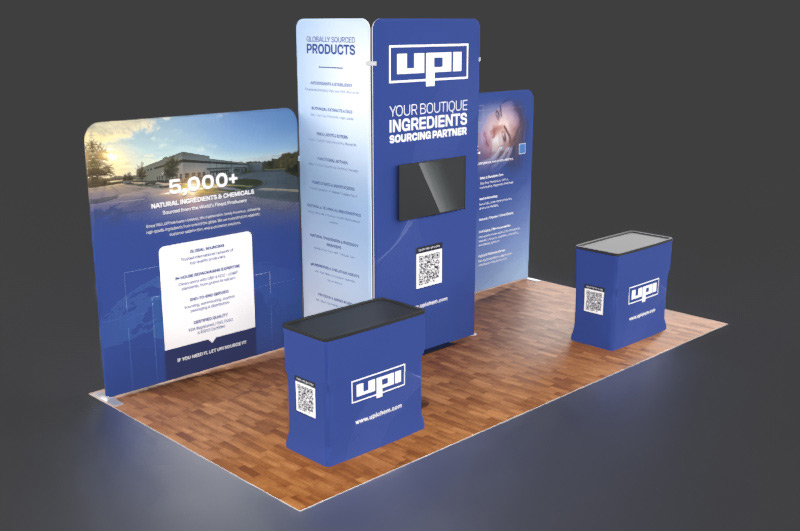
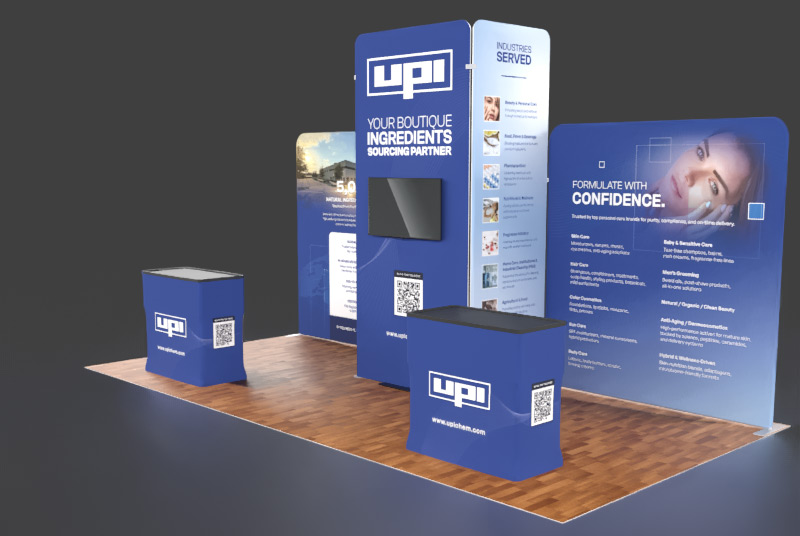
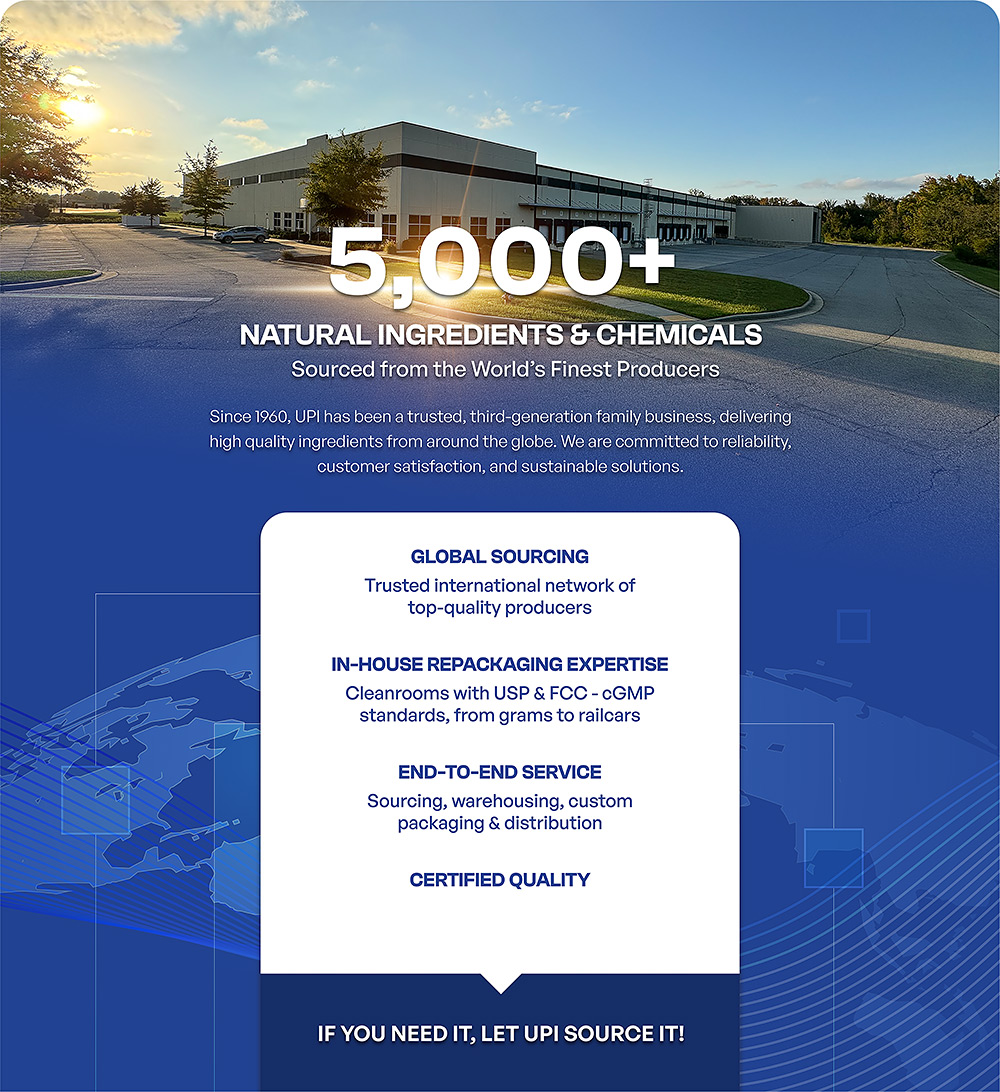
UPI Global Ingredients
A booth system for a boutique ingredients distributor: one clear headline, a backlit tower, large-format graphics and a counter that opens the conversation rather than blocking it.
In the aisle, with the client.
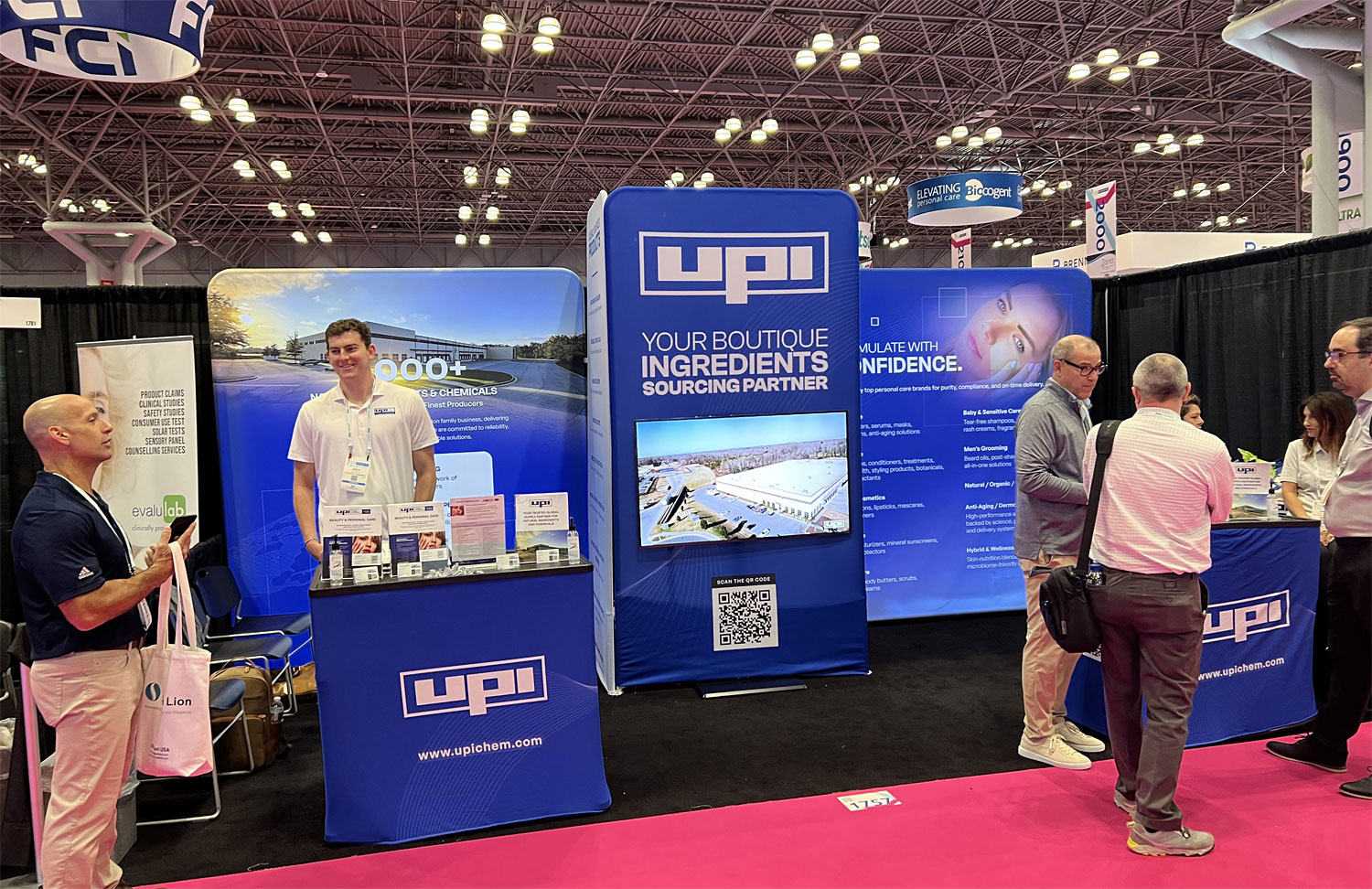
A booth earns its cost in the conversations it starts. Here is a HEXNET-built booth doing exactly that, with our team in the aisle alongside the client.
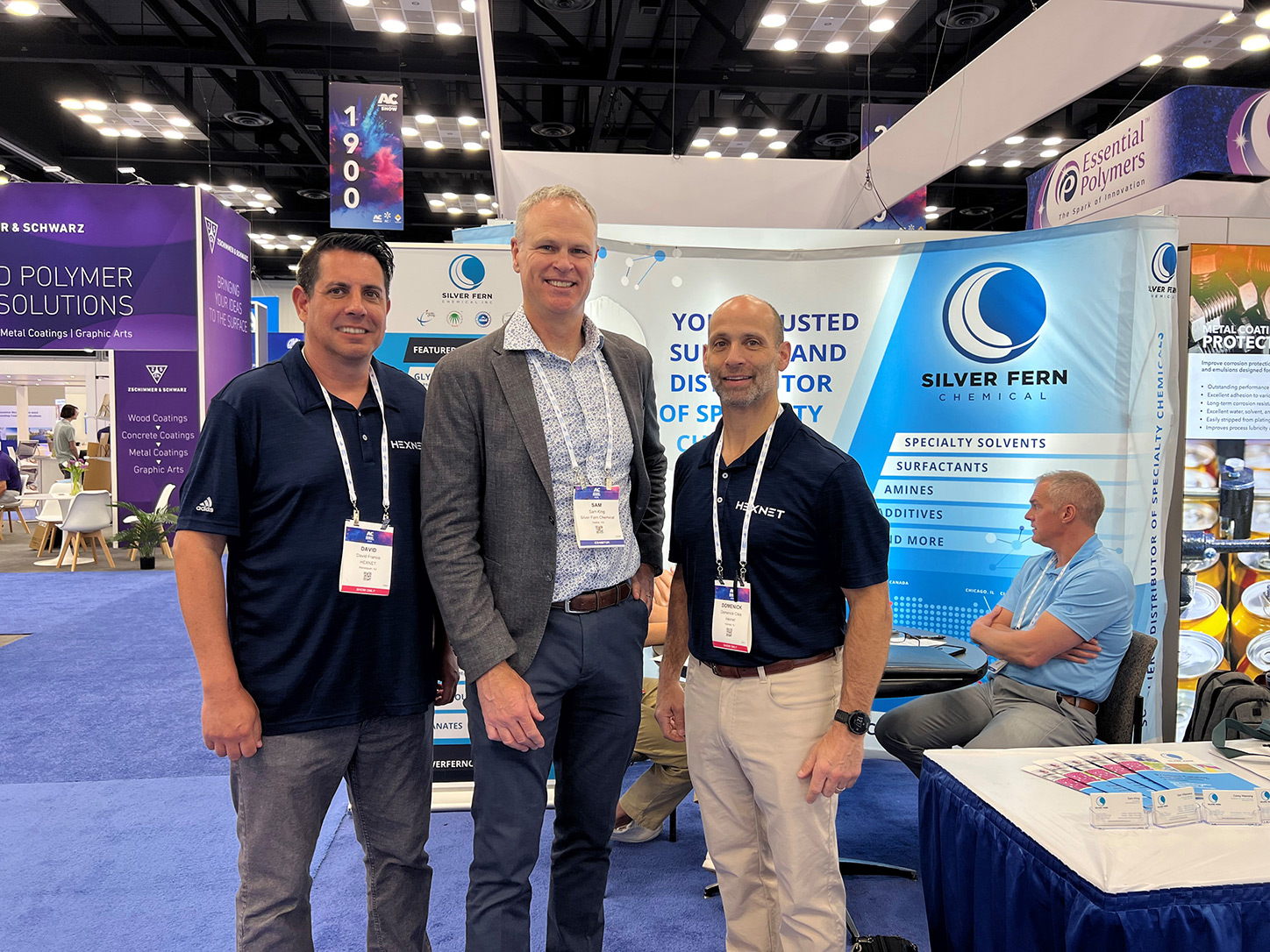
Silver Fern Chemical
Positioning, booth graphics and the show-floor presence for a specialty chemical distributor — built so a stranger in the aisle can tell what the company sells in a glance.
Client names and the fact that trade show work was produced are the only details stated. No show dates, outcomes or fabrication responsibilities are claimed.
A booth is a commercial system that happens to be a room.
Seven questions we work through before anything is designed. This is commercial planning around the environment, not fabrication or architecture. Select a layer.
Can they see us?
Sightlines, height, light and where people actually walk. A beautifully resolved booth facing the wrong way is a very expensive wall. This is decided from the floor plan, before any graphic exists.
- Aisle approach and sightlines
- Height and hanging elements
- Light, contrast and backlighting
- What is visible from each direction
The floor is the hardest test your brand takes.
On a website, a weak system is survivable. At thirty feet, backlit, next to a competitor who decided the same thing, it is not.
A system that only works on screen is not finished.
Large format exposes typography that was never tested above 40 points, palettes that collapse under show lighting, and photography that was fine as a thumbnail. We would rather find that before the file goes to production than on the Tuesday morning of the show.
One idea, carried the whole way.
A positioning consultant, a brand studio, an exhibit house and a digital agency can each do good work and still produce a show presence that argues with itself. Continuity is the thing being bought.
The headline on the booth should be the same argument the website makes, the line card repeats and the follow-up email opens with. Not similar. The same.
Messaging & PositioningOne commercial partner. The right specialists behind the work.
Depending on the engagement, a trade show program may involve our team, specialist vendors, fabrication and production partners, and vendors you already use. We are not pretending a booth is built in our office.
The commercial direction and the coordinated result
You have one partner accountable for whether the show presence makes sense, and one set of people who already understand your business.
- Strategy and messaging for the show
- Creative direction and graphic design
- Coordination across the pieces
- The campaign before and after
- Consistency with everything else you publish
Production and fabrication, where specialists belong
Build, print, install and logistics sit with people who do it every week, including your existing vendors where you have them.
- Exhibit fabrication and structures
- Large-format and backlit production
- Installation and dismantle
- Shipping and show services
- Specialist production as required
Scoped to the show in front of you.
A two-level island and a ten-foot inline cannot share a price, and neither can a company that needs a full program and one that needs graphics and a headline. Trade show work is quoted per engagement.
Trade show engagement
Scope is built around the show, the footprint and how much of the surrounding program you want carried. Few engagements include everything below.
- Show strategy and audience definition
- Messaging and booth headline
- Creative direction and booth concept
- Environmental and large-format graphics
- Sales materials and product presentation
- Video and screen content
- Pre-show campaign and meeting support
- Post-show follow-up and content
- Coordination across partners and vendors
Ongoing Agency Services
Companies that exhibit two or three times a year usually keep a monthly program running, so the campaign, content and sales material around each show are produced without a scramble.
- 01Foundation · $3,500 per month
- 02Momentum · $6,000 per month
- 03Scale · $10,500 per month
The show engagement is quoted on its own. Monthly programs cover the work around it, not the booth itself.
You paid to be in the room.Make sure the market knows why.
Start with the next show
Tell us the show, the footprint and who you want standing at the counter. We will tell you what the space has to do before anyone designs a graphic.
Talk about your next showSee the rest of the work
Websites, messaging, brand systems, catalogs and video, produced by the same team that builds the show presence.
Agency Services overview