Your company evolved.Did the brand evolve with it?
Established chemical, ingredient and industrial companies rarely have a brand problem on purpose. The portfolio grew, a division was acquired, the website was rebuilt by someone else, a trade show needed graphics on short notice. Nothing was wrong at the time. Twenty years later the company is bigger than the way it presents itself.
Our job is usually not to erase what a company built. It is to work out what has earned the trust, keep it, and rebuild the system around it so the next ten years of material still look like the same business.
Each one was produced by a different person, in a different year, under a different deadline. Individually defensible. Together, they describe five companies.
The mark is one component.
Nobody chooses a chemical supplier because of a logo. What decides the impression is whether every surface a buyer touches behaves like it came from the same organization. Select a component.
The identity mark. Visible, important, and roughly a twelfth of the work.
What the company is for and who it is for. Every visual decision underneath is downstream of this one, which is why brand work that starts with a mood board usually gets redone within three years.
Not every company needs a rebrand.
Most need less change than an agency would like to sell them and more discipline than they expect. Select what is true of your company and the recommendation on the right will move.
Keep it.
If none of these describe your company, the honest answer is that you do not need brand work. We would rather tell you that now than bill you to discover it. Spend the budget on execution instead.
An interactive prompt, not an assessment. The real recommendation comes from looking at the business, the portfolio and the material you actually use, which is where any engagement starts.
Decide what deserves to survive first.
Brand work in an established company is an inventory before it is a design project. Something in there is the reason a customer called you in 2009 and still calls you now.
Preserve
What already carries recognition, equity and trust. Throwing it away is the most expensive mistake available in this category.
- The name buyers search for
- Marks and colors with real recall
- Language the sales team already uses
- Reputation attached to specific products
Refine
What is inconsistent, dated or quietly limiting. Usually this is where most of the value is, and it is rarely the logo.
- Typography that cannot carry technical content
- A palette that fails on screen or in print
- Materials built from five different templates
- Photography that does not match the operation
Evolve
What the company needs for where it is going: new markets, new divisions, a larger portfolio, a different kind of buyer.
- Architecture for divisions and acquisitions
- A system that handles a growing catalog
- Digital expression that works as a product
- Standards the organization can actually follow
The question is never “what should this look like now.” It is what has earned the right to stay, and what is in the way.
Identity, applied across a real company.
Brand work is only visible where it lands: the site, the catalog, the booth, the deck, the document nobody thinks about. These canvases are sized for real HEXNET project assets.
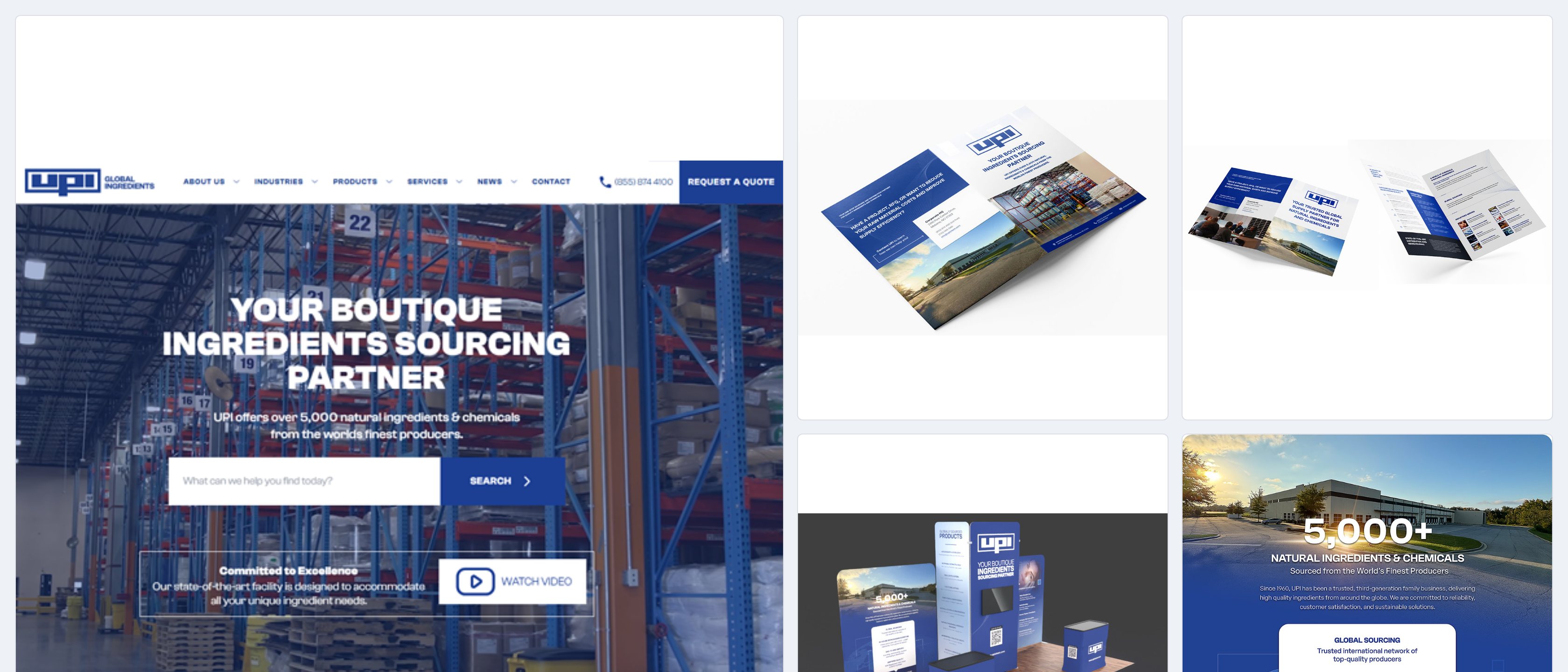



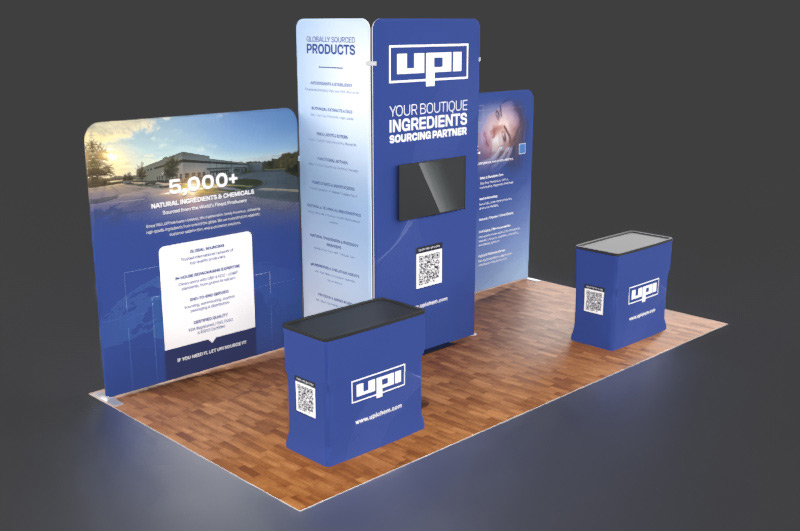
Selected examples of HEXNET client work, shown within the brand system that produced them. The before / after example is in preparation.
David: confirm which brand or visual-system projects HEXNET performed, what the actual scope was in each case, which clients may be named publicly, and whether any genuine before state exists and is cleared for use. Captions and client names should be written from that list, not assumed.
A brand has to survive contact with the organization.
Eight parts of the system, and the surfaces each one has to hold up on. Select a part to see where it gets tested.
Identity
The mark has to work at the size of a browser tab and the size of a booth header, in one color on a drum label and in full color on a cover. Most legacy chemical marks were drawn for print and have never been tested anywhere else.
Highlighted surfaces are where this part of the system is most often found broken.
Two different problems, often confused.
Messaging decides what the company needs to communicate. Brand decides how it is recognized while communicating it. A company can have one without the other, and the wrong engagement wastes a year. Select the quadrant that sounds like you.
Right story, wrong presentation
The company knows what it stands for and the sales team says it well, but the materials undersell it. The brand looks like a smaller business than the one showing up to the meeting.
Brand refresh and system build. Positioning stays, the visual and digital expression is rebuilt around it.
A brand guide is not a deliverable. It is a starting point.
Most brand projects end at a PDF, and the system degrades from the first week. Because the same organization builds the websites, the catalogs and the campaigns, the brand can carry straight into the things the company actually publishes.
Identity, type, color, image, message
Components, rules, states, spacing
Pages built from the system
Catalog, product pages, documents
Articles, applications, markets
Trade show, email, outbound, video
Each step is where a brand is usually lost. A system that reaches the product page and the booth graphic is a different kind of asset from one that reaches the end of a presentation.
Websites & Digital ExperiencesConsistency is an operations problem.
Brands do not usually fail at launch. They fail eighteen months later, when a new hire, a new vendor and a rushed trade show each make a reasonable decision on their own.
Make consistency easier than inconsistency.
If following the system is slower than ignoring it, it will be ignored, and no amount of brand policing changes that. The work is to give people the file they were going to make anyway, already correct.
Standards
Short, usable rules rather than a 90-page document nobody opens twice.
Design tokens
Type, color and spacing defined once and used by the website and the templates.
Presentation templates
The corporate and technical decks people actually build from.
Sales material templates
Line cards, spec sheets and leave-behinds in the system.
Digital components
Reusable page and product components rather than one-off layouts.
Image direction
What photography of a plant, a product or a person should look like here.
A chemical brand has more to carry.
A consumer brand system has to look good across a handful of surfaces. A chemical company’s system has to stay coherent across a catalog, a documentation library and a sales organization in four countries, without turning into visual chaos.
Large product portfolios
Hundreds or thousands of items that still need to look like one company.
Technical information
Specifications and data that have to stay readable, not styled into uselessness.
Chemical and product names
Long names, synonyms and CAS numbers that break naive typography.
Markets and applications
The same portfolio presented differently to coatings, personal care and water.
Divisions and acquisitions
Brand architecture that can absorb a company bought next year.
Documentation
SDS, TDS and certificates generated by systems, not by designers.
Certifications and facilities
Proof assets that need a consistent place to live.
Distribution relationships
Material used by partners who are not under your control.
International audiences
Translation, units and regional requirements inside the same system.
Technical sales teams
People who need templates, not inspiration.
Trade shows
Large-format work where small inconsistencies become very visible.
Digital discovery
Pages that must stay legible to search and AI systems as well as people.

“Manufacturers don’t struggle because they lack information. They struggle because their systems aren’t designed to scale it. We build systems that keep product data accurate, consistent, and usable as companies grow.”
We can look before we recommend.
Brand conversations usually start with taste. We would rather start with what is observable: how the company currently presents itself, what competitors claim, what buyers search for in the category and how digital systems currently describe the business. It makes the first meeting shorter and the argument less theoretical.
Evidence informs the strategy. It does not make the decision. What a company should stand for, and which parts of its history are worth keeping, is a judgment made by people who understand the business and have to live with the result.
Scoped to the decision in front of you.
Brand work ranges from a two-week assessment to a full system rebuilt across every surface. We scope and quote each engagement individually, because pretending otherwise would mean guessing.
Brand strategy & refresh engagement
Scope depends entirely on what the diagnostic finds. Not every engagement includes every item below, and some companies need two of them rather than all nine.
- Brand assessment
- Identity refinement or identity system
- Brand architecture for divisions and acquisitions
- Visual system: type, color, image direction
- Brand standards and templates
- Messaging alignment
- Digital application and design system
- Launch and rollout
Keeping it alive
A system holds when someone keeps producing inside it. Ongoing Agency Services programs cover that execution: content, pages, campaigns, sales material and trade show work, made correctly by default.
- 01Foundation · $3,500 per month
- 02Momentum · $6,000 per month
- 03Scale · $10,500 per month
A brand engagement is quoted on its own. Monthly programs carry the system forward afterwards; they do not include the brand work itself.
Keep what earned the trust.Build what the next chapter needs.
Start with an assessment
Send us your site, your catalog, your last booth and the deck your sales team uses. We will tell you what is worth keeping and what is holding the company back.
Request an assessmentSee where it has to land
Websites, product catalogs, trade shows, video and sales material, produced by the same organization that builds the system.
Agency Services overview